Since the 2nd January, the giant Google has terminated their personal health record service called Google Health. All data was delete. Google Health was created in 2008 and the decision to finish the service was done last year, because people were not using it as much as they hoped. The idea was pretty good in my opinion, because it was a web-based service to keep track of your health records (including medical imaging exams of course). This type of service has several advantages: keep track of past doctor appointments and medication, keep control of our radiation dose,... Google redirects their users to Microsoft HealthVault. I just created an account.You need to install a connection center to upload your data such as medical imaging studies (Microsoft HealthVault Connection Center Version 4 or later), but I'm not sure how compatible it is with Mac or Linux. I guess this is establish a more secure and stable connection to transfer your data. The interface seems quite intuitive to use. You can also create a record for your family members and help them keep track, e.g. for my grandmother which doesn't even use the Internet.
Links:
Organized health record
http://www.microsoft.com/en-gb/healthvault/organise/medical-records.aspx
Why did Google Health Failed?
http://techcrunch.com/2011/06/26/why-google-really-failed-money/
Showing posts with label DICOM. Show all posts
Showing posts with label DICOM. Show all posts
Friday, January 18, 2013

Thursday, January 17, 2013
Free Medical Imaging Visualization Sofware
If you ever worked with medical images, you know there is a confusion of
data formats and programs to visualize images. It is true that the DICOM standard helped a little bit, but only a little bit. Interfile, Analyze, NIFTI are other image formats widely used. And probably, you don't
want to spend money on programs to visualize medical images. Manufacturers have the possibility to burn a CD with your images and those CD's bring a visualization software to work with. Most health providers will give you a CD to take to your doctor.
Siemens offers the program Syngo fastView free download. This program helps you to visualize images and it is a very basic version of the hospital workstations. The good thing is that you can open DICOM images from other manufacturers such as Philips and GE (I personally have tried GE images).
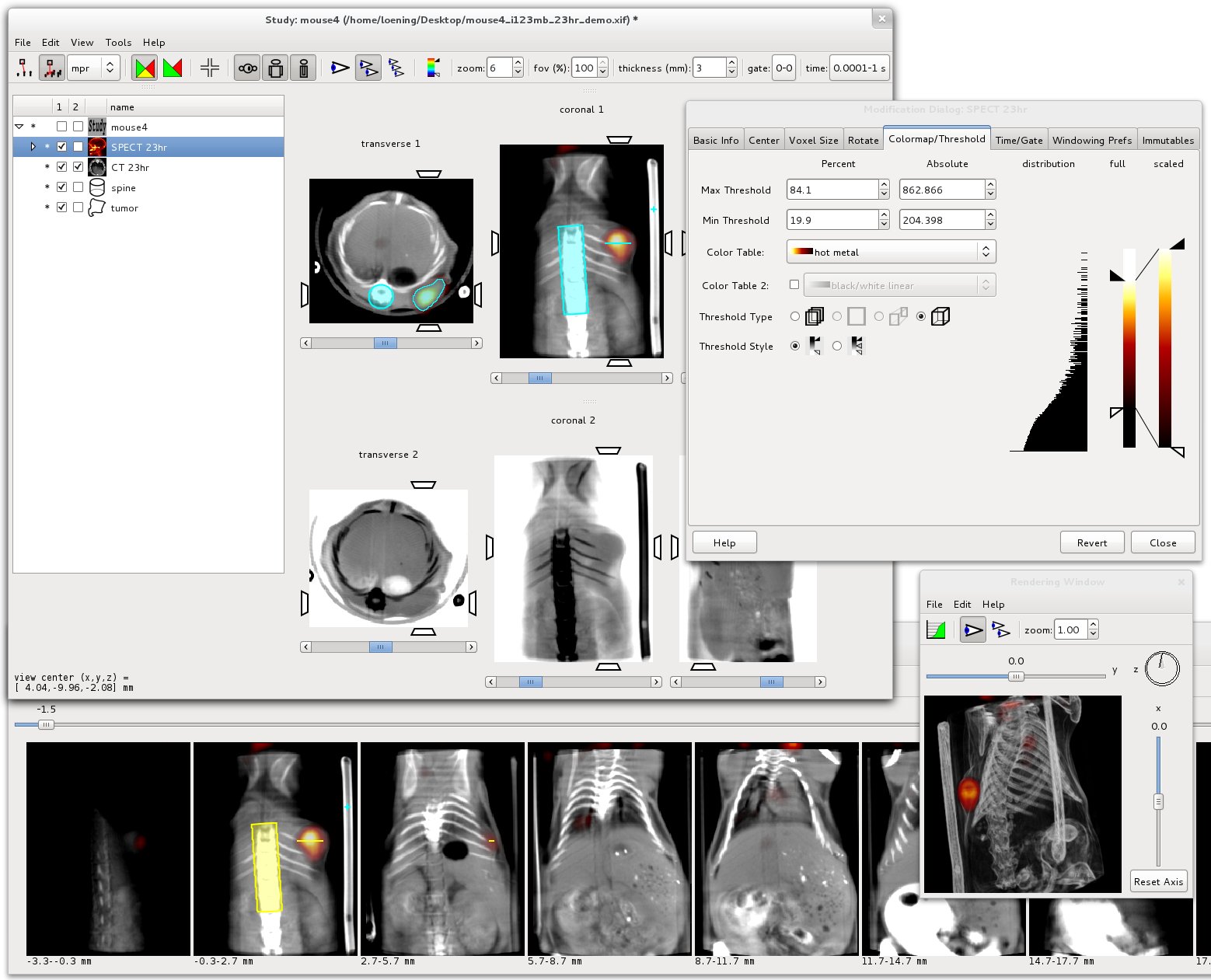
If you are an open-source fan and/or have images which are not DICOM, there are several programs. I have experienced several of them and I will tell you about my favorite: AMIDE. 4 main reasons why I like this software: easy to install in any platform Linux, Windows and Macintosh, is able to save jpg for your documents, deals very well with several formats and it is possible to read images which are not any of the standard formats if you know the data details.
Links:
Philips DICOM viewer
http://clinical.netforum.healthcare.philips.com/us_en/Explore/Clinical-News/MRI/Philips-DICOM-Viewer-download
Understanding and Using DICOM
http://www.ncbi.nlm.nih.gov/pmc/articles/PMC61235/
Siemens offers the program Syngo fastView free download. This program helps you to visualize images and it is a very basic version of the hospital workstations. The good thing is that you can open DICOM images from other manufacturers such as Philips and GE (I personally have tried GE images).
If you are an open-source fan and/or have images which are not DICOM, there are several programs. I have experienced several of them and I will tell you about my favorite: AMIDE. 4 main reasons why I like this software: easy to install in any platform Linux, Windows and Macintosh, is able to save jpg for your documents, deals very well with several formats and it is possible to read images which are not any of the standard formats if you know the data details.
Links:
Philips DICOM viewer
http://clinical.netforum.healthcare.philips.com/us_en/Explore/Clinical-News/MRI/Philips-DICOM-Viewer-download
Understanding and Using DICOM
http://www.ncbi.nlm.nih.gov/pmc/articles/PMC61235/
Subscribe to:
Posts (Atom)